What It’s Like to Be a Psychologist in a War Zone
Seeing patients over Zoom from a bomb shelter in the first days of the war, with six children at home.
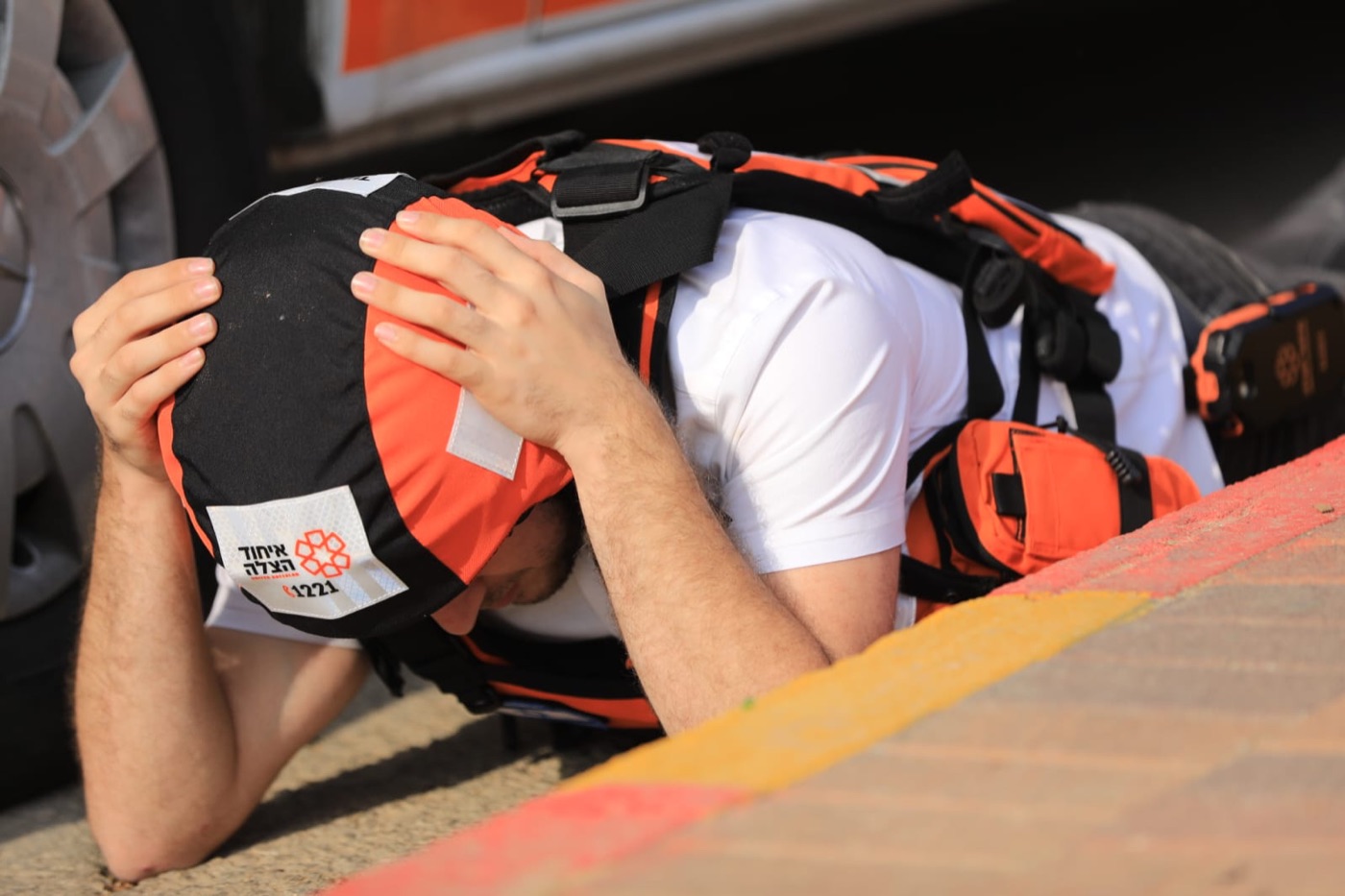
Photo: United Hatzalah Spokesperson's Unit, October 10, 2023, via Wikimedia Commons, licensed CC BY-SA 4.0.

Today was a harder day than yesterday. I’ve been holed up in our apartment straight since Saturday morning, with one venture out on Sunday to stock up at the pharmacy and grocery. I wasn’t trying to work much until today. School is closed indefinitely and my husband and I are both working from home, but since I’m more flexible and work part-time, today was the first day that I saw patients here in Israel (over Zoom) while Shlomo held down the fort. It felt good to go into my office, lock the door, leave the chaos of 6 kids stuck at home, and clear my mind to see my patients.
My first couple of the day, immigrants to Israel from Oregon, started our session with a litany of the dead they know. The work colleague from Oregon whose enlisted nephew was killed within the first half hour of the war. The US friend whose son is missing, presumed kidnapped and tortured – he was attending an annual music festival that celebrates peace. The couple from Kibbutz Be’eri who were hiding in their bomb shelter when terrorists burst in. They both threw themselves on top of their teenage son. He survived.
As a psychologist on Zoom, you have the advantage and the disadvantage of watching your own facial reactions. When I heard this last part of the dirge- when I heard about an orphaned child, hospitalized with a bullet in his stomach, his parents gone because they sacrificed themselves for him – my face crumpled. I sobbed quietly for a minute. Was that the right reaction? Was it clinically appropriate? I don’t know. All I know is that it was not possible to not react with sobs.
After the session, I was completely physically drained. I hadn’t had time yet to eat anything of course. And I’m not sleeping (like most of the adults in Israel right now). We have 6 kids between the ages of 11 down to a 1.5 year old, and they are all home, in our 5-room apartment in Rehovot. I’m moving all day either trying to work, check in with patients, follow the mess, or just be there with and for my kids. But I needed real food before I could face the next patient. Sunday there was no bread left in the supermarket (I got the last of the milk), but this morning we managed to snag 2 loaves.
I fixed myself and whichever kids were in the kitchen some of my mother’s signature comfort food - soft-boiled eggs with toast. I gave all the kids food, woke up my terribly sleep-deprived husband from his catnap, and took my food out to the porch to eat, along with my second coffee of the day and a Rosemarie chocolate stick. But I was soon followed by all 3 of my daughters and my oldest daughter’s best friend, over for a sanity-saving playdate. Of course. I had 20 minutes until my next client and all I wanted to do was replenish myself. As psychologists, that’s what we’re told to do, right? Practice self-care so you can give to others. Make time for yourself. And then I heard the deep booms overhead. The ones that mean that a group of inhumane terrorists named Hamas are shooting missiles at me and my porch full of babies, toddlers, and cute 10-year-old girls with 3 different nail polish colors on their hands alone. So instead of telling my kids that I needed some mommy coffee time, I smiled and stayed quiet and gathered my 1.5 year-old onto my lap to share the rest of my chocolate stick.
My husband dove into the chaotic mess, and I locked the door again to face a patient who is bravely recovering from a childhood of emotional neglect. Originally from NYC, she lives in Jerusalem with her husband and 2 adorable kids – a tow-headed 2-year-old and a nursing baby (I happen to know they’re adorable, because I ran into her at the Western Wall on Sukkot, as we both made the pilgrimage to our holiest site). This patient has no shelter in her apartment. When the sirens go off, the safest she can get is to grab her two babies and run into the stairwell to wait them out. But ‘she’s fine.’ We spent the session talking about how her body knows when she just cannot handle the horror of her reality right now, and that it’s OK if she numbs out – that’s what she needs to do to survive.
At the last minute, I canceled my afternoon research meeting because I simply had no emotional headspace to plan methods or get excited about statistics (thank you US colleagues for your warm wishes back!). And I needed to prepare for my next two patients. Everyone here, bar none, is desperate to help in whatever way they can. I’m a psychologist, so my contribution has been to offer my services pro bono. Since my Hebrew isn’t yet good enough to do therapy in Hebrew, I reached out to a few yeshiva seminaries to offer free sessions to some of the thousands of US and European teenagers who come here to study. I got emails taking me up on the offer immediately and had scheduled two back-to-back for the afternoon.
The first, an 18-year-old from NJ with a history of anxiety, has never been this anxious before, and is swinging between extreme irritability and total numbness. We talked about the fact that she’s having exactly the right 'normal reaction to an abnormal situation.' It’s not every day that you wake up in a time warp, where mobs are committing pogroms and beheading babies and thirsty for your blood because you happen to be a Jew. And we talked about the fact that she can’t necessarily use her regular toolbox of cognitive behavioral anxiety tools now because this isn’t irrational worry - she’s caught in an ongoing national trauma with missiles heading towards her dorm.
My second student patient, a 19-year-old who returned to Israel for her second year of learning, had a very simple complaint – she can’t sleep. ‘Really can’t?’ ‘Maybe an hour a night.’ I started giving her my usual sleep hygiene psychoeducation and treatment plan, but she already knew most of the tools. The problem is this: every time she closes her eyes, she sees the videos of Hamas mobs shooting and raping and shoving bloodied Jews into Jeeps. She sees footage of crowds of Arabs, in Israel and in the Gaza Strip, cheering as Jewish women and babies are tortured. And she can’t sleep. What do you say to a patient in that case? I talked about meditation and obsessive images and gently turning attention away, and in my stomach I felt my inadequacy to heal her.
And one more patient. Sunday night we thought we could chance not sleeping in the bomb shelter. You see, we’re among the luckiest and most privileged in Israel right now. Shortly after we tore our nation apart and destroyed our own Gazan hometowns in 2005 to give Palestinians their own territory, hoping and trusting that this would bring the peace they promised (Land for Peace after all - right? That’s what the world says you want, right?), Hamas started shooting bombs at the sitting duck Jews who lived a few miles away. Not at the soldiers- at the towns and apartment buildings and schools and parks. So residential buildings built post-2005 by the nation that is perpetually murdered tend to have a bomb shelter in each apartment. We happen to live in a newer building, so when the sirens first shocked us out of sleep early Shabbat morning, we were able to grab our 6 pajama-clad kids and run into our 4th bedroom, otherwise known as our bomb shelter. After continuous rockets for hours Shabbat morning and then sirens again Saturday night, all 8 of us slept (or didn’t sleep, as the case may be) on, around, or under the two twin beds I have there for guests. But our fortified room is also my office. My kids wanted to sleep there, especially my poor 8-year-old son. Sammy is a sensitive soul, who after inadvertently being exposed to some pictures of body bags while I was looking at the news, told me that he doesn’t feel sad that the terrorists who killed innocents are dead, but he feels so sad for their families. He has been terribly anxious, especially at night, because ‘Hamas wants to kill kids.’ But it had been calm on Sunday, and I had patients in the US to see. The kids reluctantly fell asleep in their own beds.
On the advice of a colleague, I often won’t tell my non-Jewish patients based in NY that I live in Israel. 'It’s too politically charged’ - you never know who will hate you because you think Israel deserves to exist. So it’s 11:30 PM and I am sitting in the office/ bomb shelter in the middle of a session with a really darling 21-year-old art student who was feeling so lonely because her friends and boyfriend hadn’t been there for her fully on her birthday. And then the internet went off for some reason. Thank G-d, because five minutes later - as I ineptly struggled to fix the internet - the Red Alert sirens went off. You can only hear it faintly from our apartment, especially with the windows closed and A/C on, but soon the Home Front Command apps started pinging. Shlomo was still awake on the couch, and my 11-year-old, Aaron, couldn’t sleep and had come out of his bed to finally open up to his father. He started frantically screaming ‘Sammy, Lea, everyone wake up, there’s a siren!’ Shlomo and I tried to wake up our kids more calmly and get everyone into the shelter. That’s when the handle of the door fell off. The handle of the iron bomb shelter door (as our guests here know all too well) is a thick iron lever that needs to be slammed shut with a lot of force, and then twisted up to bolt us in safely. All the unaccustomed urgent slamming over the past hours was just too much for it - it came right out of its casing and bounced on the floor, in two parts. Shlomo and I looked at each other in horror. We spent a few frantic minutes trying to fix it. And then I realized that it could still be turned from the outside, just not from the inside. I said, “One of us has to stay outside and close it, I’ll stay out.” Of course, Shlomo didn’t let me. So while he’s locking us in, he’s outside with the siren wailing, and all my kids are wailing inside the room. Lea, my 10-year-old pillar of a daughter, fell apart at that point - she’d been so calm and helpful, and now she just collapsed in screams. Thank G-d Daniel and Ariella semi-slept through it all. Adele is 16 months – she has no idea what is going on – but she is smart enough to respond to frantic wailing with her own inconsolable crying. Sammy and Aaron reacted the way you react when you think your father will die because bombs are being hurled at you and he’s outside of the fragile box designed to keep you alive. Thank G-d my amazing, cool-under-pressure husband grabbed the toolbox and managed to MacGyver a quick fix, so that by the time the next sirens warned us of more rockets, he could hunker down with us, in all the protection a room can offer.
Oh, and my sweet client who was in (real, genuine, valid) pain about her birthday? It just didn’t seem like the right time to tell her that I live in Israel and that our session was interrupted by Hamas trying to kill me and my 6 children. So I sent her an apologetic email about my internet being down (which was also true) and only charged her for a half-hour session.
Originally posted on LinkedIn.
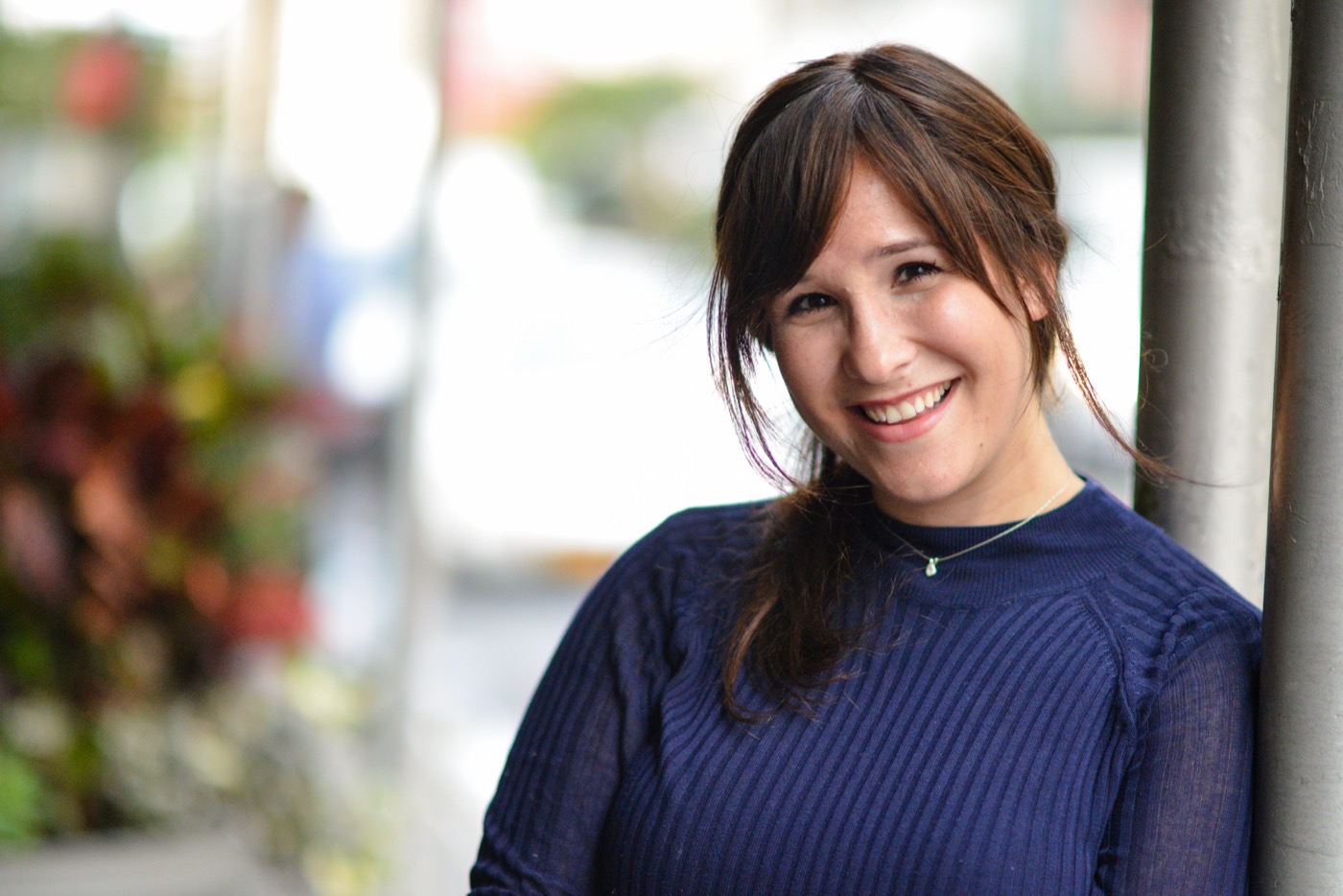
Dr. Peryl Agishtein, Ph.D. is a clinical neuropsychologist and the founder of Lifespan Neuropsychology. More about her →
Blog posts are general information, not medical or psychological advice, and reading them does not create a treatment relationship.