When the Images Seem Here to Stay
Why the usual advice for intrusive thoughts falls short after October 7, and a Gestalt chair-work exercise that helps.
Raise your hand if you’ve had an unimaginable image or unbearable thought or suffering human being visit you, again and again, in the past month.
Even those of us who are taking extreme care to filter our news and what we see (and we all must and should be doing this!) have imaginations. To hear the news since October 7th is to know that this world can contain what should be unimaginable evil. All you need for those pictures to take over is an imagination.
We’re not always in control of our brains. To be human is to occasionally have a thought or an image or a memory pop up that you don’t want. Psychological science has reams of evidence pointing to the best antidote. If a thought or an image pops up that you don’t want to make space for in your brain, don’t push it away, but gently turn your attention to something else. And when it pops up again, do that again. If you forcefully push it away, this bully of a thought just gets stronger. If you acknowledge it, wave hi, but then turn away to something else, that thought loses its power and will eventually drift away.
It took me until the 3rd day of this war to understand that this tried-and-true technique that I’ve successfully used with dozens of people with OCD or ruminations or post-partum anxiety – doesn’t work. After posting an offer for free short sessions for American students here in Israel impacted by the war, I quickly had a list lined up. I was seeing a sweet 19-year old from Brooklyn who was complaining about insomnia, but kept shaking her head at all my usual sleep hygiene suggestions. She’s tried them all. But when she lays her head on the pillow and closes her eyes, her brain begins to play a reel of some of the horrific imagery that she was exposed to on the first night of the war, before people understood the awful impact of sharing these videos.
What sleep hygiene tool could possibly be powerful enough to combat videos of babies’ severed limbs? How can “imagine your brain is a sky, and the thoughts are clouds” help when a loving mother can barely look at her 10-month old baby because every time she does, the image of another 10-month old, kidnapped to Gaza, pops up? How can our usual sex therapy tools help the woman with a great relationship who has started sobbing every time she sleeps with her husband because of survivor’s guilt, and the knowledge of her hundreds of sisters who were brutally raped and mutilated before they were slaughtered?
We psychologists are still finding our way in this resilient new world. Here’s one tool that has been helping when you can’t get rid of those horrific images. It comes from Fritz Perls’ Gestalt therapy and the original ‘chair work,’ and was taught to me years ago by a deeply wise and experienced therapist, Chana Simmonds.
We try to shield ourselves. When that doesn’t work, when the image or memory or snippet of info pops up, we often will try to push it away. Preferably with both hands, because how can a human brain contain such pain? I’m here to suggest something else.
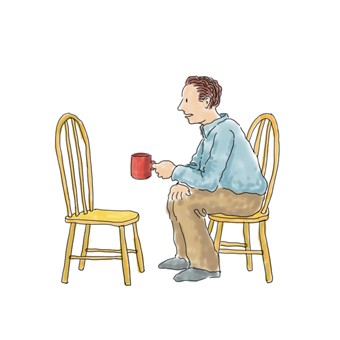
Instead of pushing away the horrific image or thought, talk to it. Is it a baby? A mother? A young man? Is it a statistic? A snippet of a story? Sit down, with your eyes closed. Imagine that person next to you, in an empty chair. Or take a nice notebook and pen to a quiet corner. And let yourself talk (aloud, in your head, in your writing) directly to that image. Tell the person in the image how you feel. Share your sorrow. Share your grief with them. Tell them how you long for their happiness. Don’t push them away. Gather them in with your shared humanity.
And after you weep for them, say goodbye, dry your tears, and begin living your life again. For them.
Originally posted on LinkedIn.

Dr. Peryl Agishtein, Ph.D. is a clinical neuropsychologist and the founder of Lifespan Neuropsychology. More about her →
Blog posts are general information, not medical or psychological advice, and reading them does not create a treatment relationship.